The Real Frida Kahlo
Alma Guillermoprieto on the Mexican artist’s flesh-and-blood struggles


Fridas for Everyone
Alma Guillermoprieto
Just when you thought that everything Frida had been Frida-ed—a hundred books, a million fashion moments, a jillion selfie homages, and a veritable continent of accumulated Frida tchotchkes, from mugs to oven mitts to compression socks to Christmas tree ornaments in the form of a gold-trimmed frame with an image of a dog dressed up as Frida, not to mention a movie or two—this spring High Art Frida returned. There was an exhibition at the Museo de Arte Moderno in Mexico City of works from the Gelman Collection, among them a large number by Frida and Diego Rivera. There was an exhibition of the work of Frida and her followers that started at Houston’s Museum of Fine Arts and is currently at Tate Modern, and El Último Sueño de Frida y Diego at the Metropolitan Opera, together with a small installation at the Museum of Modern Art of works related to it. To counter the socks and dog-faced Fridas, the culture seems to have felt the need to reestablish a connection with the flesh-and-blood artist, the profoundly original woman who used her own face as both a mask and a revelation of a soul stripped bare, who wore ethnic dress as a conjuration, and who spent her life painting not just her portrait but her Sinnbild, a term that the German Mexican art historian Paul Westheim used to signify “the image of the meaning.”
To begin at the beginning: Frida Kahlo Calderón’s father was German. He came to Mexico when he was nineteen to seek his fortune, married a Mexican woman, translated his name from Wilhelm to Guillermo, eventually took Mexican citizenship but spoke Spanish always with a German accent, and became an architectural photographer who also made many self-portraits in which he stared fixedly at the camera. As a girl, Frida (she spelled her name “Frieda” but dropped the e in her twenties) was a laughing, lighthearted spirit who was popular in school. Years later, though, she would mention how her schoolmates had mocked her skinny right leg and slight limp, the result of a double misfortune: spina bifida—a deformation of her spinal column—and then what was most likely polio at the age of seven. In the intensely nationalist Mexico of the 1920s, swept up in postrevolutionary fervor, it is reasonable to assume that her schoolmates also made fun of her good-natured foreign father and did not consider her quite Mexican.
Whatever the case, she grew up defiantly original, seductive in dress and manner, and fiercely nationalistic. An essay by James Oles in the catalog for the Houston/Tate show takes us through the evolution of her wardrobe: she painted herself for the first time as a beautiful sophisticate in a velvet dress, posed for her father in a Chinese-style gown, and wore a three-piece man’s suit for a family photograph when she was eighteen. And long before she married the world-famous muralist Diego Rivera and began experimenting with native dress, she found another way to declare her Mexicanness: she swore like a sailor. Even her correspondence is littered with self-conscious cabrones, chingaderas, and pendejos. A strange effect, this tiny, well-brought-up girl puffing on a cigarette and reaching for a seaman’s vocabulary. Oh, and she decided she was partially Jewish, although the evidence indicates that her paternal ancestors were of stolid Lutheran stock. While she was at it, she determined that it would be better if she were born not in 1907—her real birth year—but in 1910, the year of the start of the great Mexican Revolution. Self-made Frieda! She would continue to invent herself, or her self, with each portrait to the end.
Largely self-taught, in her late teens she was already making small self-portraits that she considered inconsequential, impelled to do so after a streetcar collided with a bus in which she and a boyfriend were riding and drove a handrail through her pelvis and out her vagina. She spent three months lying face-up and in traction, and no doubt the training in staying still helped her get through a lifelong cycle of surgical torment, months of immobility, and painful recovery.
According to legend, Diego was standing on scaffolding at work on his great muralistic portrait of Mexico at the Ministry of Education when someone commanded him to descend. A young person at the foot of the ladder thrust a few of her canvases at him. “Listen,” she said. “I need you to tell me if these are any good or not.” Years before, at age fourteen, she had already decided that she would marry the famous old fat man she had spied painting a mural on the wall of her high school. He was married at the time to the stupendously beautiful Guadalupe Marín, but they had separated by the time Frida accosted him. Disarmed and seduced by the audacious Frida, he began his elaborate formal courtship soon after she introduced herself—complete with weekend visits to her aged parents. They married in 1929, when she was twenty-two and he was forty-two, and her painting of the couple on their wedding day is a study in charm, tiny Frida and enormous Diego side by side, solemn and holding hands. The style was consciously naive, but she was always a sophisticated artist, with a library of visual references in her head: the Houston catalog points out the painting’s kinship with Jan van Eyck’s portrait of Giovanni Arnolfini and his wife, of which Frida kept a reproduction. For the first time in a painting she is wearing not elegant velvets and silks but a Mexican rebozo.
What to make of her ethnic clothing, so essential to her worldwide appeal today? It was only after Frida and Diego returned from a long sojourn in the United States, more convinced than ever of their Communist faith and militant anti-imperialism, that she began to wear native dress. And among the countless beautiful garments with which the indigenous women of Mexico once adorned themselves she gave pride of place to those of the women of the Isthmus of Tehuantepec, the tehuanas, and especially their glorious ceremonial costume: a long skirt with a petticoat-like flounce at the bottom, a waist-length huipil densely embroidered with flowers, and, surrounding the face, the starched, pleated resplandor, white as the moon. In many if not most of her photographs, and also in the self-portraits, Frida is wearing the tehuanas’ simple everyday outfit: a long skirt with a bottom flounce and a short, square blouse with machine-sewn geometrical embroidery. She added a plain dark gray central Mexico rebozo with a simple fringe, which became so essential to her she even wore it in her hospital bed. Frida laid claim to roots in Oaxaca through her mother, who was born in the state, but in photographs recently found in the Casa Azul, Señora Matilde Calderón wears the staid, high-necked, long-sleeved dress of nineteenth-century urban women.
Naturally Diego, with his deep love of the Indian and pre-Hispanic worlds, encouraged the outfits, and of course they are a comfortable and graceful style of dress, and beautiful beyond compare. It was not particularly original of Frida to wear indigenous garb: society ladies and bohemian women alike loved to pose for studio photographs in tehuana costume, and even before the revolution the Frenchified upper classes sent their children off to the school play dressed like inditos, as Mexican parents do still. Also, the long skirts covered her gimpy leg. The question is, though, why did Frida choose to portray herself repeatedly in this costume? No doubt she was concerned with the desperate situation of the indigenous throughout Mexico, but they are not present in her work as they are constantly in Diego’s murals, not even in the forty or so of her paintings that are not self-portraits. Rather, Frida might be saying as she stares directly at the viewer, I am Frida Kahlo and I am wearing this costume because that is what I wear. But perhaps she enrobed herself in Mexicanness to counter an old fear of not being Mexican enough.
Read the full article on the Review’s website here.
Now Available:
Unrequited Love
A New Seminar Series from Daniel Mendelsohn
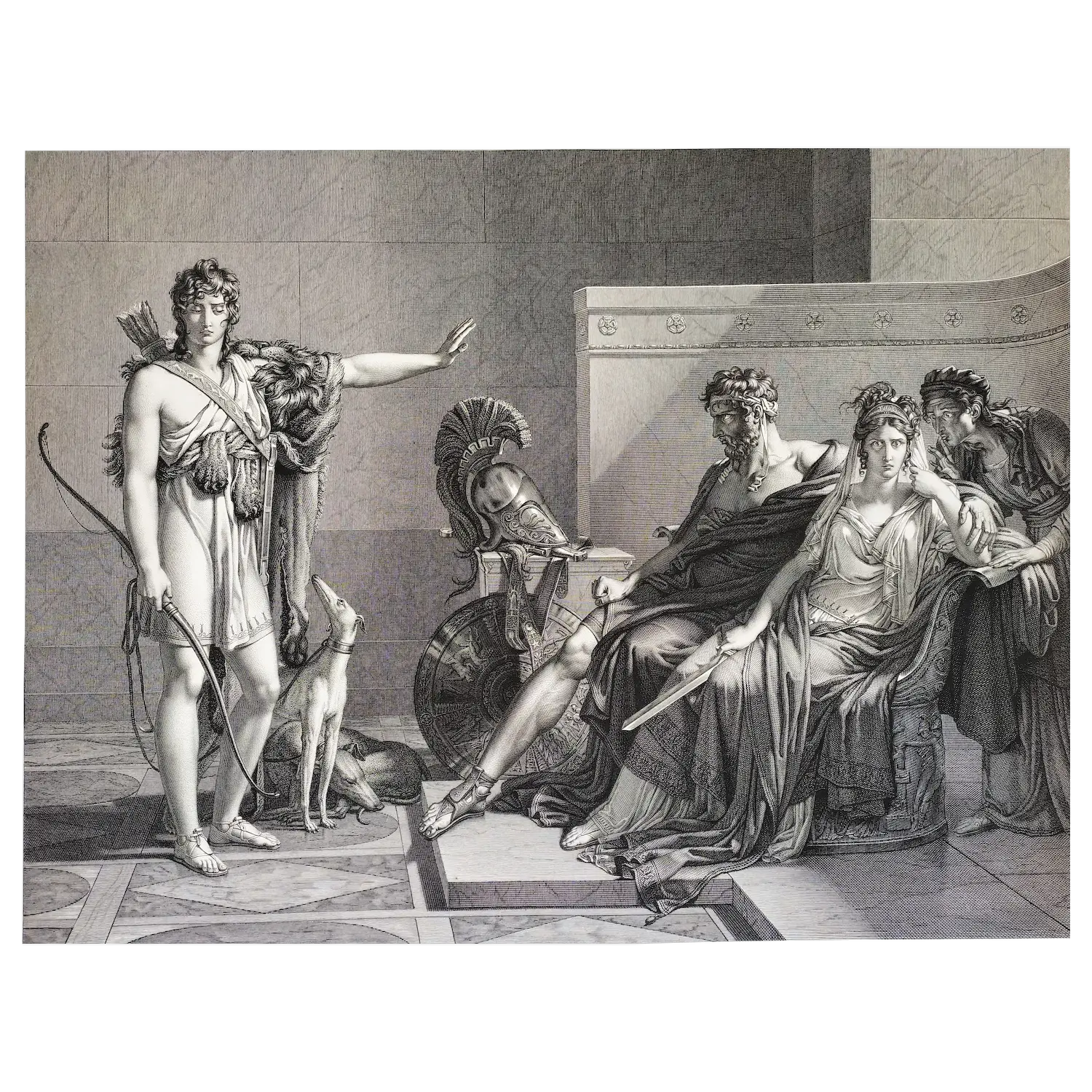
Author, critic, and translator Daniel Mendelsohn follows the theme of unrequited love in works by Homer, Sappho, Dante, Goethe, Jane Austen, W. Somerset Maugham, Marcel Proust, and more.
“Thou lov’st me not, / And never wilt! Love dwells not in our will. / Nor can I blame thee, though it be my lot, / To strongly, wrongly, vainly love thee still.” So Lord Byron in Love and Death, describing a phenomenon that (alas!) most of us have experienced—and, more to the point, that has inspired some of the most brilliant and wrenching works of literature. In this five-part NYRSeminars season, we will be examining the phenomenon of unrequited love throughout its evolution as a subject in Western literature. We will begin with the classics, examining texts by Homer, Sappho, the tragedians and the Latin love elegists, and then move to the Middle Ages and early modern period, reading works by Dante, Petrarch, and Shakespeare in which the poets address themselves to cruelly unresponsive women. From there we will segue to the novel, which takes over as the preeminent vehicle for examining hopeless love: from Goethe and Jane Austen to Somerset Maugham and Marcel Proust.