The Great ‘Paintoonist’
Chris Ware on the life and work of Jerry Moriarty


Jerry Survives
Chris Ware
As an artist in the second half of the twentieth century, Jerry Moriarty did everything you weren’t supposed to do: he painted people, he painted places, and, perhaps worst of all, he told stories with pictures. It’s important to note how not-accepted this was between the 1950s and 1970s, in the messy aftermath of abstract expressionism, when many artists had disowned figuration and family in favor of non-objective paint-spattered flats. But Jerry drew pictures of America as Americans remembered it, if not even still lived it: childhood, parents, home. Like many of his peers, he spent much of his career alone in a small Manhattan studio but, upon retirement, he moved back to his childhood home.
Like many people, I was first introduced to Jerry’s work in the pages of Art Spiegelman and Françoise Mouly’s RAW magazine via his strip Jack Survives, in which the eponymous character, both Jerry’s dad yet also not his dad, passed quick, quiet moments of the everyday. Jerry’s bold, solid, black-and-white strips seemed to have been pencilled by Ernie Bushmiller and inked by Edward Hopper, proffering a loud-but-soft view of middle-class midcentury America. Like so much in RAW, it felt strange, but unlike so much in RAW, it also felt strangely familiar. Jerry’s strips somehow caught the scent of sun-warmed houses and 1940s sofas and made the time when men wore hats and women wore housedresses feel real. A window into what I’d imagined my grandparents’ early lives might’ve been like, his work chided the squareness of that generation but with a gentle empathy for their difficulties (war, economic scrimping), without the dismissiveness that some baby-boomer writers and artists seemed to have for their parents. His bold, sturdily composed panels and solid sense of objects and people lent it an eternal quality, seemingly in conflict with the ineffability of its domestic situations and the dissipating half-life of conversations, thoughts, and the words one says only when talking to oneself, the whole adding up to not exactly a comic strip, but something like a picture-poem with a punchline.
The first collection of Jack Survives, published in 1984 by RAW Books and Graphics, was designed by Spiegelman and Mouly, its cover separating Jerry’s eight-crayon-box colors and his bold black brush drawing into two layers, the ink lines printed on an acetate jacket which under one’s fingers slipped in and out of alignment with the bright hues below. It reminded me of the anatomy overlays in my grandparents’ encyclopedias, and offered a lesson in not only how comics were printed but also the basic cognitive distinction between drawing and painting (to say nothing of the difference between remembering something and actually seeing it). His original comics pages are strange palimpsests, in which penciled memory-details disappear under acrylic white or emerge as emphasized ink, the approach more evident in the 2008 reprint of Jack Survives, in which Jerry chose to highlight his pages’ simultaneous boldness and delicacy in full-color scans instead of the contrasting black-and-white of the first edition. In a way, this echoed his overall artistic method: Jerry’s assertive, Hopper-esque drawings—see Hopper’s etchings, especially—mellowed once they made it into his paintings, softening into full-color acrylic studies on paper before ending with his almost diaphanous oils on canvas. These paintings, generally composed of three, sometimes four brightly colored panels, were meant to be not just looked at, but read.
Jerry wanted to be accessible and eschewed pretension, later labeling himself a “paintoonist” as a sort of self-effacing and disarming pre-strike against anyone who might consider denigrating his efforts, for which he was always on high alert. In his early life he’d tried abstraction and also working as an illustrator, but found he was comfortable with neither, disappearing into a private life subsidized by working as a teacher at the School of Visual Arts in New York. Over a period of several decades he produced a considerable oeuvre that basically no one ever saw unless they visited his Manhattan studio/loft.
Read the full article on the Review’s website here.
Unrequited Love
A New Seminar Series with Daniel Mendelsohn
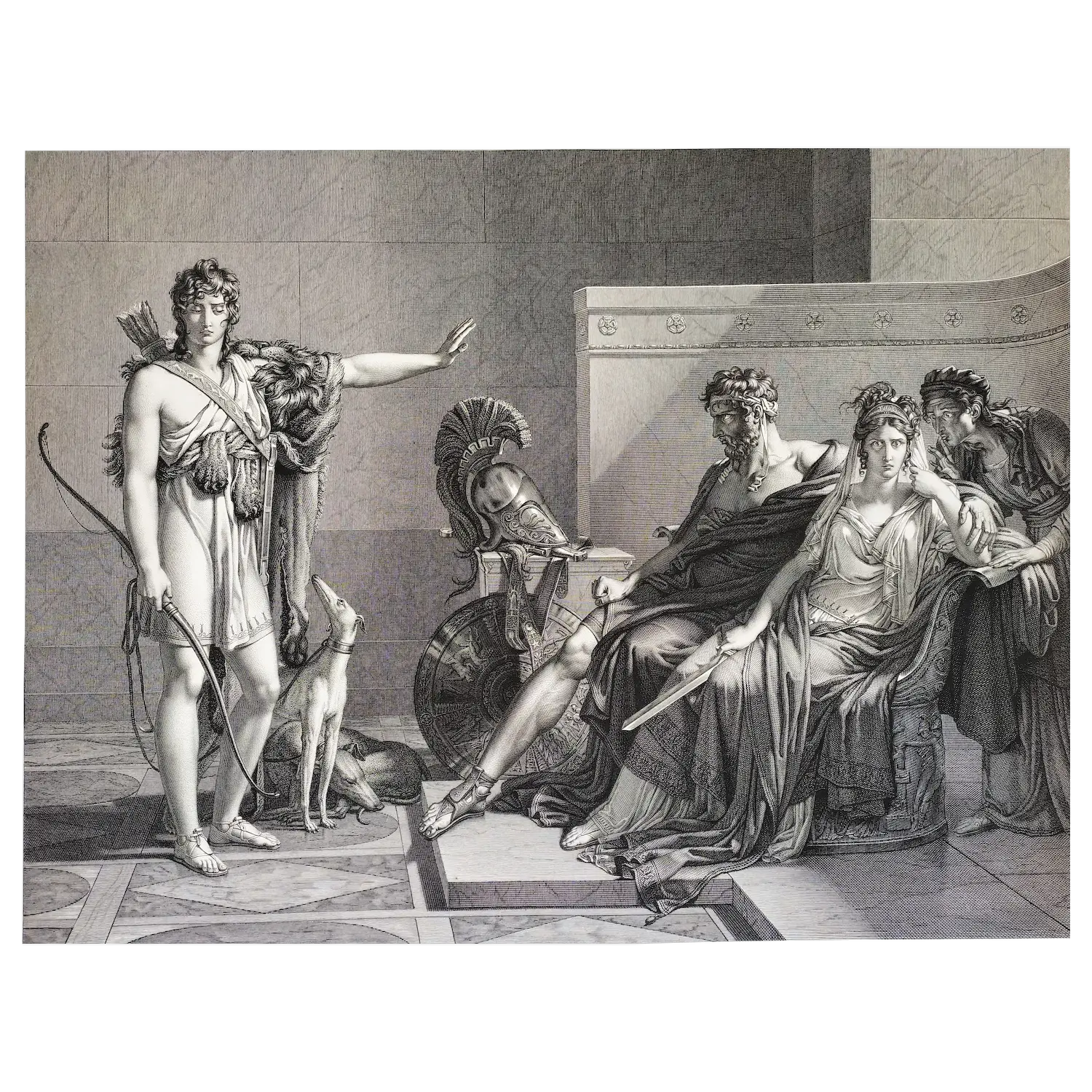
Author, critic, and translator Daniel Mendelsohn follows the theme of unrequited love in works by Homer, Sappho, Dante, Goethe, Jane Austen, W. Somerset Maugham, Marcel Proust, and more.
“Thou lov’st me not, / And never wilt! Love dwells not in our will. / Nor can I blame thee, though it be my lot, / To strongly, wrongly, vainly love thee still.” So writes Lord Byron in “Love and Death”, describing a phenomenon that (alas!) most of us have experienced—and, more to the point, that has inspired some of the most brilliant and wrenching works of literature. In this five-part NYRSeminars season, we will be examining the phenomenon of unrequited love throughout its evolution as a subject in Western literature. We will begin with the classics, examining texts by Homer, Sappho, the tragedians and the Latin love elegists, and then move to the Middle Ages and early modern period, reading works by Dante, Petrarch, and Shakespeare in which the poets address themselves to cruelly unresponsive women. From there we will segue to the novel, which takes over as the preeminent vehicle for examining hopeless love: from Goethe and Jane Austen to Somerset Maugham and Marcel Proust.