Sing Muse!
Daniel Mendelsohn on Christopher Nolan’s Odyssey


For his latest IMAX extravaganza, the filmmaker Christopher Nolan has turned from the comic book operatics of The Dark Knight and the elaborate narrative convolutions of Inception and Interstellar to Homer’s Odyssey, a story that anticipated the need for wide screens by nearly three thousand years. For our August 20 issue, Daniel Mendelsohn, the magazine’s editor-at-large and an expert in Ancient Greek literature—his translation of the Odyssey was published by the University of Chicago Press in 2025—reviews Nolan’s adaptation:
Since Nolan started dropping trailers, the Internet has been aflame with discussions of the “accuracy” of the costumes, ships, armor, and diction of the movie, but the most authentic thing about this Odyssey may well be its densely braided narrative textures, which succeed in replicating Homer’s artful weaving.
But Nolan’s talent for intricate plotting is undercut by his preoccupation with tortured antiheroes:
This tormented, guilt-ridden Odysseus, stripped of humor and wit, seductiveness and cleverness, is a sibling of Memento’s anguished amnesiac, of Batman, of Oppenheimer, men tormented by pasts they wrestle with in different ways.
Below, alongside Mendelsohn’s review, we have collected an excerpt from his translation of the Odyssey, an interview about the translation, a memoir about his relationship with the epic, his review of the movie Troy—an adaptation of the Iliad—and an episode of our podcast Private Life, in which Mendelsohn and Jarrett Earnest talk all things Homer.
Artful Weaving
Daniel Mendelsohn
Aristotle, for one, wasn’t all that impressed by Odysseus’s adventures. In the seventeenth chapter of his Poetics he observes, apropos of the relationship of a story’s “essential” meaning to its constituent episodes, that
the storyline of the Odyssey is not long. A man has been away from his homeland for many years, and Poseidon is always on the watch for him, and he is all alone. Meanwhile, the situation at home is such that his wealth is being consumed by the Suitors, who are plotting against his son. But after a storm-tossed journey he returns, and after revealing himself and attacking them is saved and destroys his enemies. That is the essential; everything else is episodes.
This summary will strike many as odd. Where, you wonder, are the famous adventures that most people think of as the meat of the great epic—the numerous escapades that showcase the ingenuity, wiliness, and derring-do of Homer’s hero during his decade-long return from the Trojan War? The Lotos-Eaters, who eat of a flower that erases memory? The seductive nymph Calypso, who holds him prisoner for seven years, offering to make him immortal if only he would stay with her—an offer he movingly refuses in favor of returning to his aging, mortal wife? His yearlong dalliance with the witchy Circe, who turns his men into swine? Or his lengthy sojourn among the effete Phaeacians, with their opulent wealth and glittering palaces, their taste for dancing and music—one of the many cultures that the epic presents as a tempting alternative to Ithaca—whose royal family the hero, deploying his famed rhetorical skills, wheedles into bringing him home?
Nor is there any mention here of the voyage to the Underworld, where, in one of the epic’s most moving moments, Odysseus attempts—and fails—to embrace the wispy ghost of his mother, of whose death, during his long absence, he had been unaware. And no mention either of the lengthiest of the adventures, the encounter with the one-eyed giant Cyclops, whom clever Odysseus—repeatedly celebrated by Homer as polymêtis (“greatly cunning”), polyphrôn (“having many kinds of intelligence”), polymêkhanos (“able to contrive many solutions”), and poikilomêtis (“of multifaceted wiles”)—vanquishes by means of an artful pun on the word “nobody,” the false name he gives the Cyclops when they first meet.
All this, in Aristotle’s summary, is reduced to “a storm-tossed journey.”
In part this is because he rightly emphasizes the importance of that other, far vaster part of the Odyssey, what he calls “the situation at home”—the crisis that the hero’s long absence has created for his city, whose political institutions are collapsing; his wife, Penelope, who is besieged by the Suitors; and his young son, Telemachus, who strives to live up to the grand reputation of the father he never knew. These constitute what screenwriting courses refer to as the “stakes”—the crisis that must be resolved by the hero’s eventual return; otherwise the homecoming has no point. Only four of the epic’s twenty-four books are devoted to the adventures, which are narrated by the notoriously smooth-talking hero himself before the mesmerized Phaeacian court: his greatest feat of verbal artistry.
But the main reason Aristotle gives short shrift to the adventures has to do with the epic’s structure. In the section of the Poetics devoted to the Odyssey, he’s primarily interested in the workings of plot. The Odyssey’s plot is one that he admires as being “complex” (the many ups and downs of its characters, the multiple scenes of recognition with which the poem concludes) and commends because of its “double thread”: the ascending arc of its hero’s rehabilitation and eventual triumph, twined around the descending arc of his enemies’ downfall.
While satisfying to Aristotle, the very complexity of the Odyssey’s narrative, constantly moving as it does between past and present, reminiscence and action, Ithaca and those far-flung voyages, is no doubt what has made it so difficult to bring successfully to the cinematic screen—this despite the fact that the adventures in particular seem to cry out for big-screen, special-effects treatment. The problem isn’t merely the vast amount of incident that needs to be covered. Homer also has a distinctive way of embedding his elaborate narratives within other narratives. Stories nest within stories; lengthy conversations are reported within other lengthy conversations. The most famous instance of this technique occurs in book 19, when an elderly housemaid who is bathing the feet of the disguised Odysseus recognizes a telltale scar that the hero had incurred during a boar hunt in his youth. At the moment she realizes that the “beggar” before her is her long-lost master, the narrative grinds to a halt in order to loop back through not one but two embedded flashbacks, first to the boar hunt and then to the day of the hero’s birth, before circling back to the present.
How to represent any of this—the structure and the technique as well as the vast tale itself—in the course of two or three hours?
Read the full review on the Review’s website here.
Odysseus Saved from the Sea
Homer, translated by Daniel Mendelsohn
Homer, The Odyssey, 5.388–450
And then he drifted about—two nights, two days—driven
By the surging waves, and his heart looked destruction
straight in the face.
But when Dawn with her lovely braids brought
the third day into the world
The wind died down and a calm, clear and still, descended
And look!—he caught a glimpse of land, right over there,
As he peered ahead intently from the crest of a towering wave.
Just as a father’s children would welcome some sign of life
When he’s lying deep in sickness suffering harsh pain,
Slowly wasting away, attacked by some fiendish Power—
And then—O welcome sight!—the gods set him free from his illness:
Just so was the sight of land and woods welcome to Odysseus.
Read the full excerpt on the Review’s website here.
Translating from Troy to Ithaca
Daniel Mendelsohn, interviewed by Lauren Kane
“My theory is that there’s something special the Odyssey has, something that the Iliad does not have at all. I want to call it a sort of ‘post-ness.’ It’s obviously a postwar poem, but it’s also a sort of post-everything poem. The old order has disappeared. The gods have receded. They’re almost not present at all, except in a couple of crucial moments, and certainly not in the way they’re present in the Iliad, where they’re all over the action and fighting in the battles. You feel the gods have withdrawn. Odysseus is a lone guy in a strange world with no familiar landmarks. The whole poem is haunted by a feeling that the old world order has come to an end, and now we’re just on our own, making our way as best we can. That may be what’s speaking to people.”
Read the full interview on the Review’s website here.

Finding a Path through the Odyssey
Daniel Mendelsohn
I was suffering from what the Greeks called aporia: a helpless, immobilized confusion, a lack of resources to find one’s way out of a problem. The literal meaning of aporia is “a lack of a path,” or “no-way.” I hadn’t been able to leave my apartment; I couldn’t think of a new project. I was, in the Greek way of thinking, pathless—the adjective, as it happens, that in the Odyssey is used to describe the sea, the terrifying blank nothingness from which Odysseus must extricate himself, literally and figuratively, in order to reclaim his identity and find his way home.
Read the full essay on the Review’s website here.
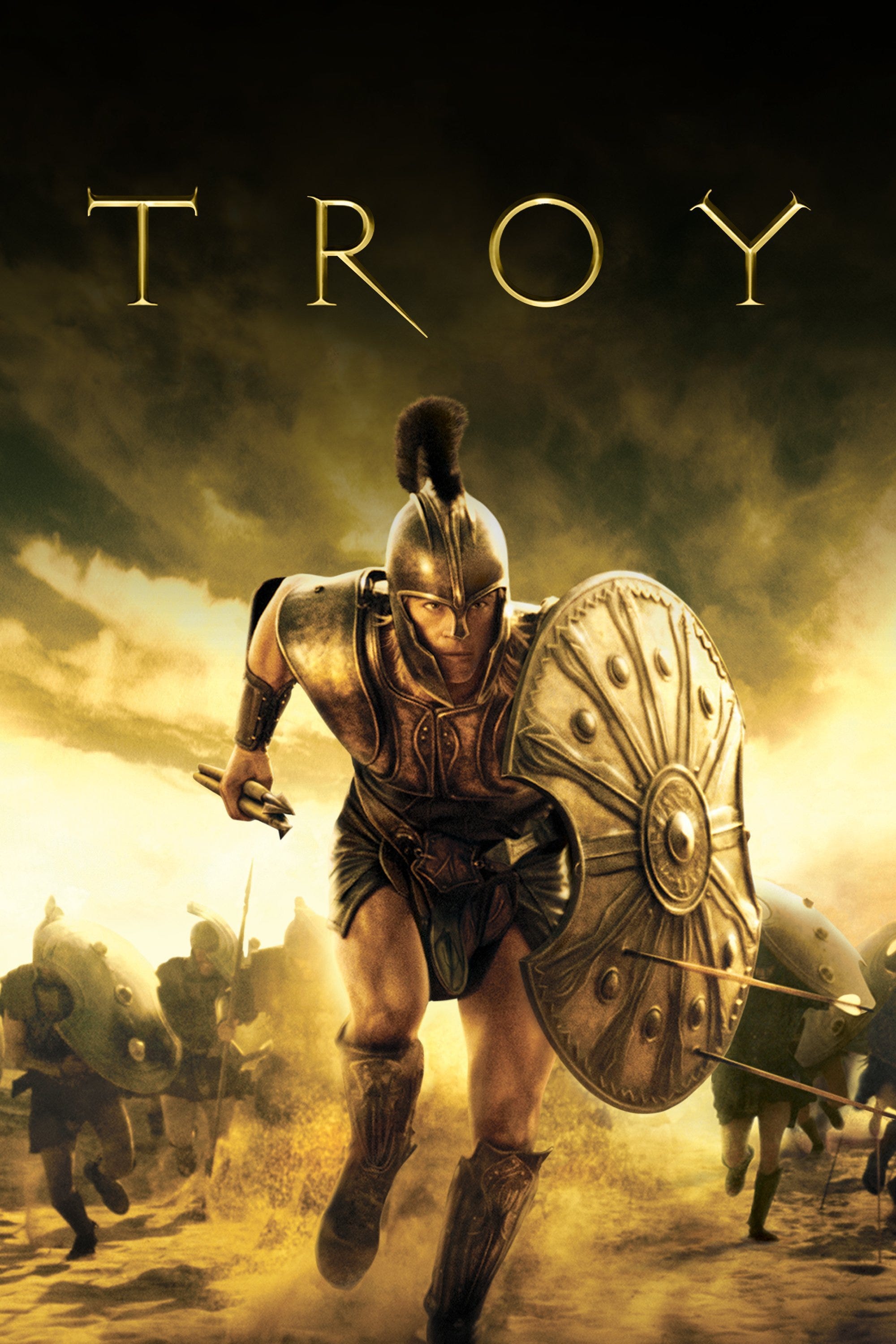
A Little Iliad
Daniel Mendelsohn
Fueled, no doubt, by a desire to expunge the vaguest hint of homoeroticism from the proceedings—by classical times, the debate wasn’t so much whether Achilles and his beloved Patroclus were doing it, as rather, as in Plato’s Symposium, who was doing just what to whom—Benioff makes Patroclus Achilles’ “cousin,” a bizarre choice that (particularly in an era when family ties have never counted for less) has increasingly hilarious results as the action progresses. Watching Troy, you’d think that there was no higher value for the Bronze Age Greeks than cousinage. “He killed my cousin!” Achilles shrieks at Priam when the latter comes begging for his son’s body at the end of the story. “You’ve lost your cousin, now you’ve taken mine,” a mournful Briseis (in this version, Hector’s cousin) tells Achilles. “When does it end?” This film’s notion that entire civilizations were destroyed because of excessive attachment to one’s collateral relations is, surely, a first in world myth-making.
Read the full review on the Review’s website here.
Study the Odyssey
with Daniel Mendelsohn

Daniel Mendelsohn’s acclaimed online seminars on Homer’s masterpiece, from autumn 2025, are now available for purchase. Gain complete access to the six seminar sessions, including Mendelsohn’s introductory lectures and the lively seminar discussions.
In this episode of Private Life, Daniel Mendelsohn joins Jarrett Earnest to discuss his 2025 translation of Homer’s Odyssey and Christopher Nolan’s forthcoming film adaptation, premiering this week. They discuss the debate surrounding the film’s casting, the significance of descriptive language in translations, and the enduring place of Greek literature, history, and aesthetics in gay cultural and intellectual life.
Listen on Spotify below and on all other platforms here.