Colm Tóibín
Reimagining the Future of Ireland
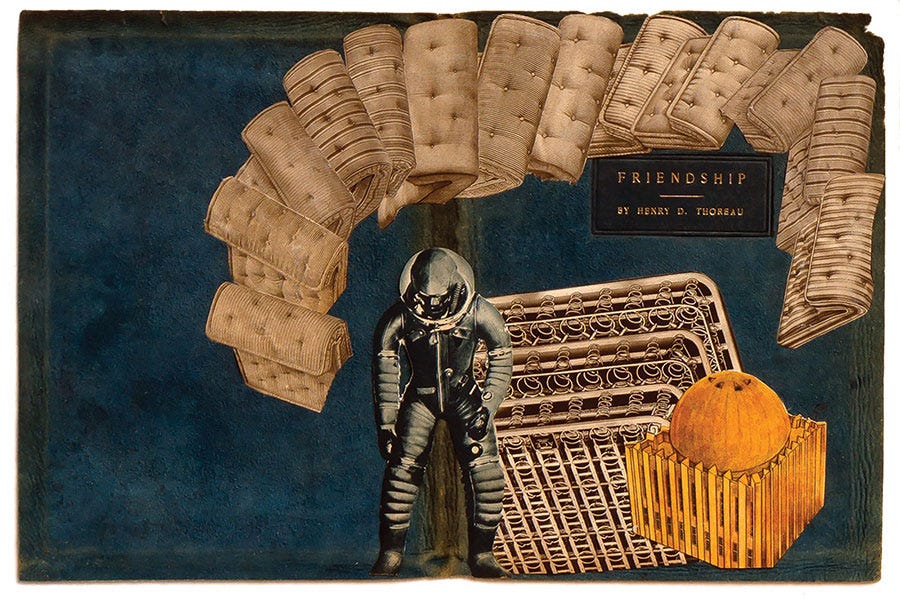
While until recently Unionists (who favor the connection with Britain) formed a majority in Northern Ireland, this has now begun to change, not only because Catholics are having more children but also because more Protestants than Catholics are leaving. For example, “about 30% of Northern Ireland students go to Britain to study,” [Fintan] O’Toole writes. “And, in turn, only 30% of those who leave to study subsequently return to live and work in Northern Ireland.” If you define Catholics as those who either are practicing or were raised Catholic, then 45.7 percent of the population of Northern Ireland are Catholics,
compared with 43.5% who are “Protestant, Other Christian or Christian-related.” Almost one in five people in Northern Ireland either has no religion or declines to state a religious affiliation.
If it is clear, then, that a united Ireland is now a possibility, it is not clear how the unification process would actually be carried out. What institutions would be amalgamated or, indeed, abolished? Who would benefit? Who would lose out? It is also unclear if such a process could be carried out peacefully.
Read the full article on the Review’s website here.
Francine Prose
Blood in the Game
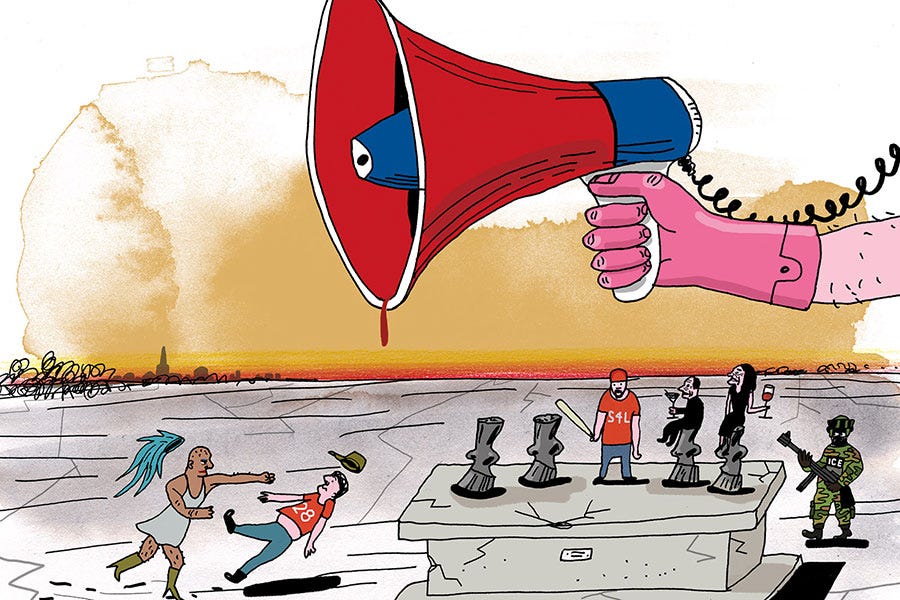
Despite the critical success of [Lee Clay] Johnson’s first novel, Bloodline was rejected by every major publishing house to which it was submitted. In a video available on YouTube, Johnson recalls editors saying that they admired the novel but felt unable to publish it because of the “current cultural climate.” It’s unclear what this meant. Did editors fear that the book’s portrayal of a MAGA-like movement, of gun culture, of a leader whose oratory echoes our president’s, of the South’s nostalgic attachment to its Confederate legacy, and of two political assassinations, one bogus and one real, might offend readers at a moment when outrage can so easily go viral?
Read the full article on the Review’s website here.

Alice Kaplan
Misjudgment at Nuremberg
Nuremberg is not really an epic or a thriller or a true crime story but rather a failed buddy movie. [Douglas] Kelley makes a play for [Hermann] Göring’s trust by befriending his wife and daughter and carrying letters to them, against all regulations. After he watches the documentary about the concentration camps played in the courtroom, their relationship descends into violent confrontation. There’s no way to describe what happens next except as love disappointed.
Read the full article on the Review’s website here.
Hermione Lee
‘To Share Is Our Duty’
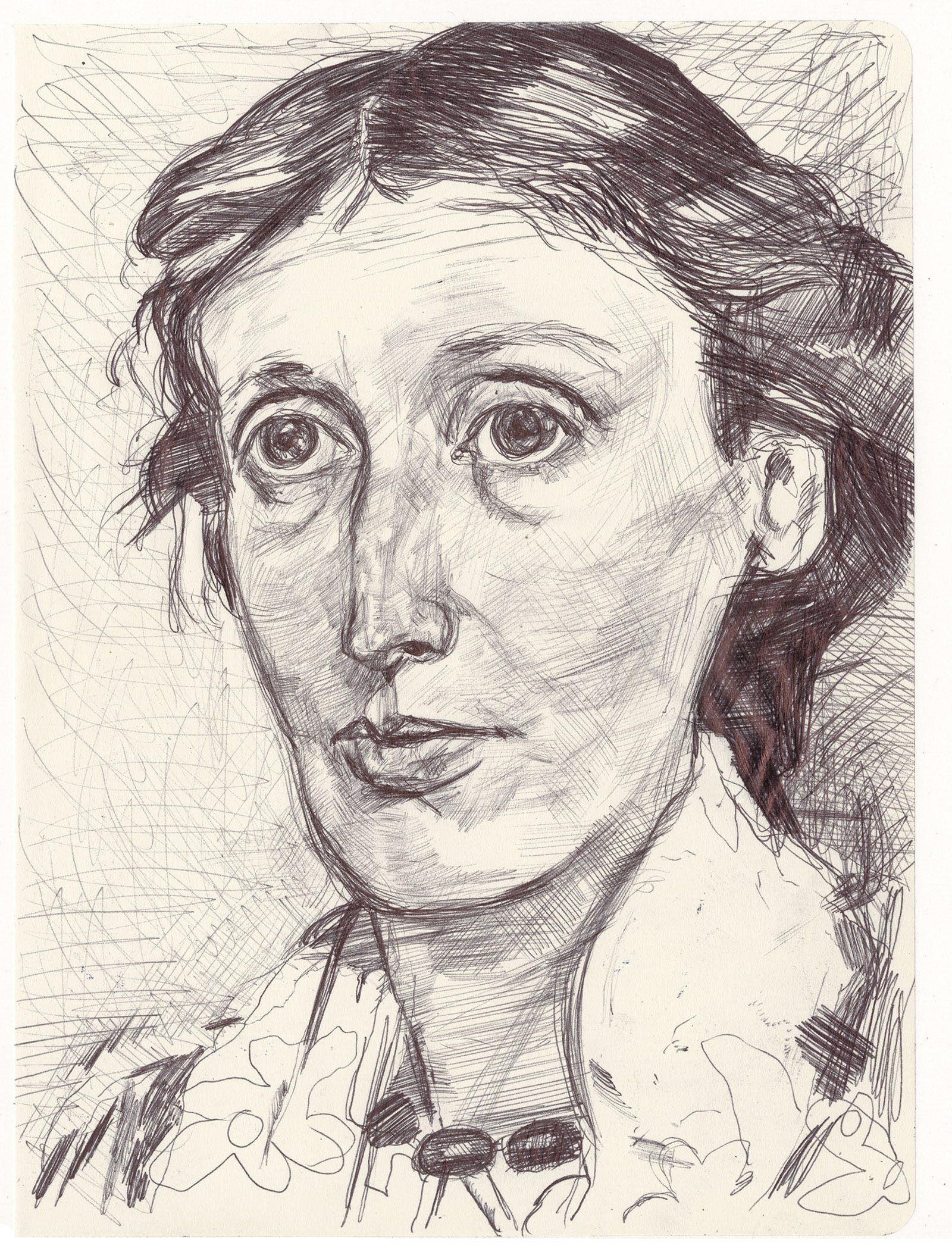
“Oh,” [Virginia Woolf] laments to one friend, “if only you would devise a way by which my social life could be regulated.” And to another: “London seemed to me appalling beyond belief.” She longs for the country and for “solitude, solitude, solitude.” All too often, illness gets in her way. Over and over again she apologizes, with fury and impatience, for having been felled by catastrophic headaches, or kept out of action by “the rhythm” of her heart (which “always skips & jumps like a lamb”). She is under the threat, in 1922, of suspected tuberculosis; she is spending weeks in bed with influenza; she is knocked out by taking chloral for sleeplessness; she has had a collapse (after finishing The Years); she has been overdoing it. She doesn’t talk about breakdowns in her letters, but it’s clear when she is being subjected to a regime, kept in bed as in “a monastery—no talking, reading or writing.” The best she can do is make a joke of it; sending a copy of The Common Reader to her doctor, Elinor Rendel, in 1925, she annotates it: “A small dose nightly to ensure sleep.”
Read the full article on the Review’s website here.

More from our Spring Books issue…
An anonymous dispatch from Tehran
Jed Perl on Morgan Meis’s funky kind of art criticism
Caroline Fraser on the dump
Michael Gorra on Civil War diaries
David Cole on the constitutional guarantee of birthright citizenship
Trevor Jackson on American “retirement”
Kathryn Hughes on Tennyson’s cosmos
David A. Bell on Notre-Dame’s original renovation
Tim Parks on Domenico Starnone’s The Old Man by the Sea
Brenda Wineapple on a Southern son reclaiming the Judaism of his fathers
A collage by Lucy Sante
An exchange on the West
Poems by Andrea Cohen and Timmy Straw