The art of Fairfield Porter is redolent of the dog days of summer, his many paintings from Southampton and Maine suffused with the light and heat of an August afternoon. As Dan Chiasson writes in his review of “Fairfield Porter: What Everyone Knows,” an exhibition at the Art Students League in New York City, “All up and down the Atlantic coast, in gift shops and frame shops catering to summer visitors, paintings superficially like Porter’s can be found next to ‘BEACH THIS WAY’ signs and hostess gifts; the closer one gets to Porter’s turf in Penobscot Bay, the more likely it is that these canvases will bear the stamp of his influence.”
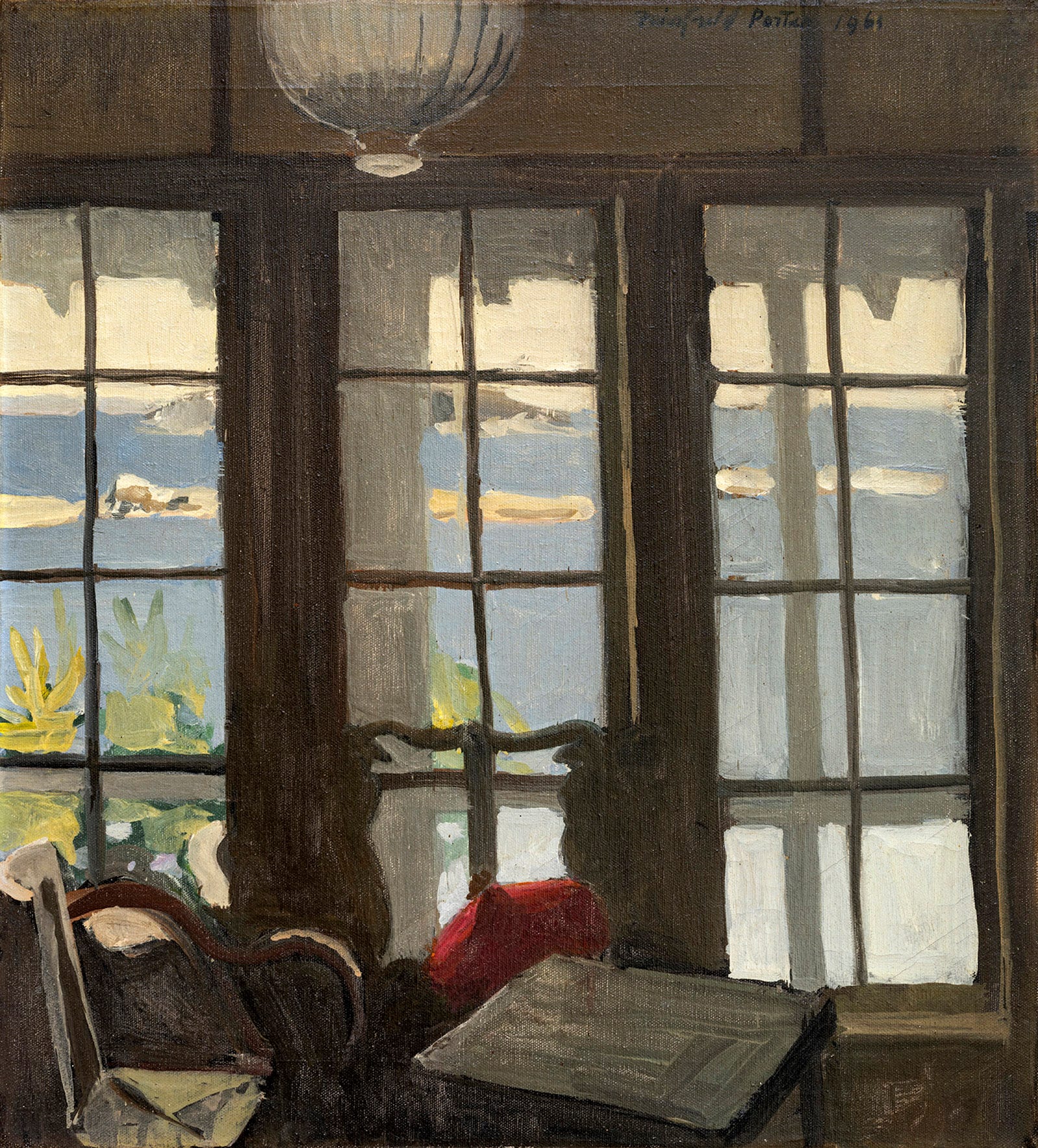
Chiasson deems Porter an “outsider” artist—given to the use of “scavenged or improvised materials” in “the tradition of American amateurs and recluses like [Emily] Dickinson and Joseph Cornell”—who, as the heir to a real estate fortune, was nevertheless part of the American ruling class. This tension between his social status and the supposed humility and simplicity of his art is one of the things that dogged Porter’s reputation, and even his sense of himself. As Sanford Schwartz noted in our pages in the summer of 2000, near the end of his life Porter wrote, “I think sometimes that as far as museums and patrons are concerned that I may be ‘finished,’ that is, that it has been decided that my work is not really any good.” But now, half a century after his death, Chiasson finds that his “paintings have deepened for me.” With twentieth-century “art spats” now well behind us, it is possible to look at Fairfield Porter afresh: “What was ‘abstraction,’ you wonder, if not the brushwork in Porter’s exuberant skies and seas? What pure color field immerses us like one of Porter’s lawns?”
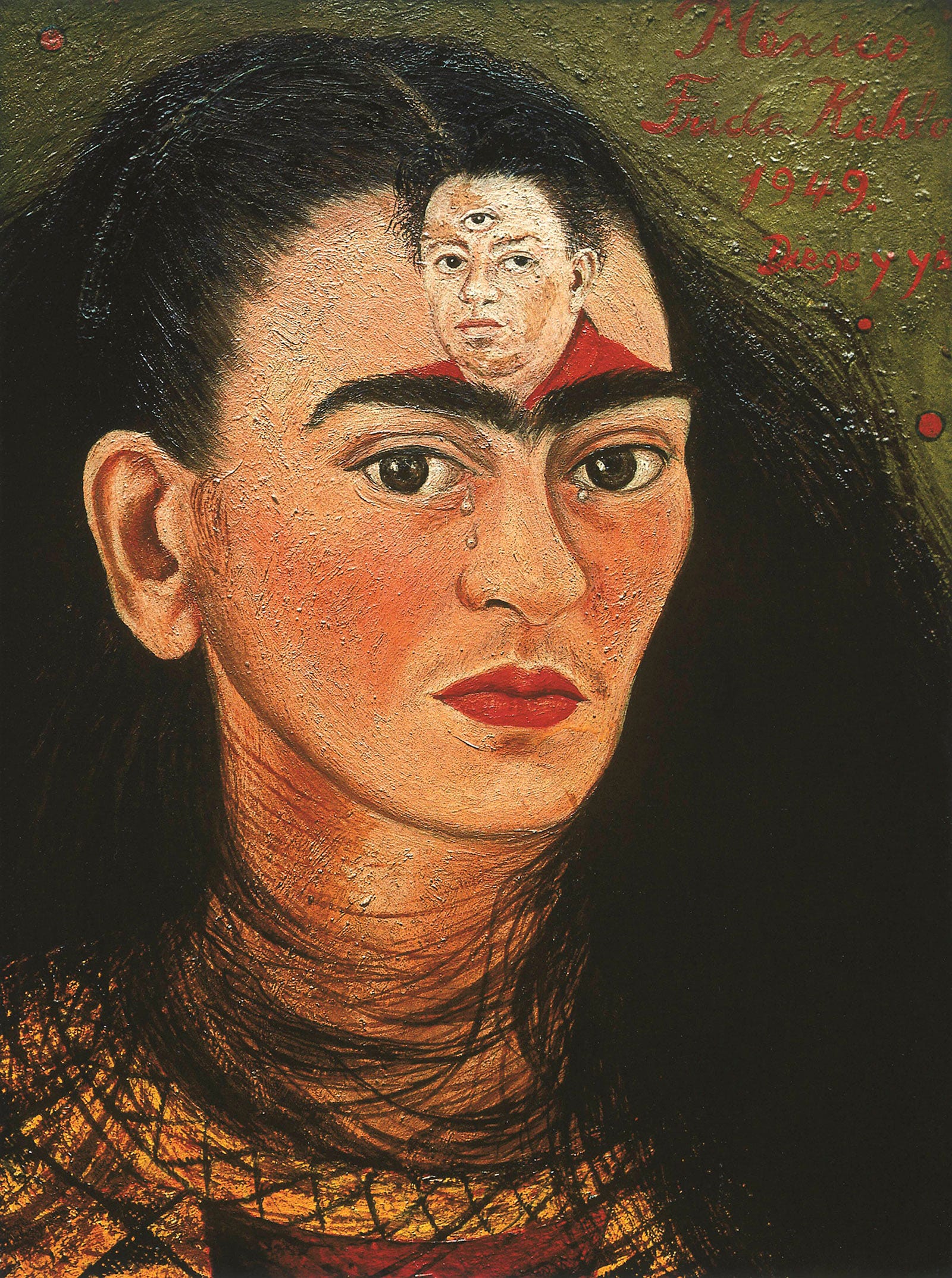
In stark contrast to Porter’s humble reputation, there is Frida Kahlo, whose familiar images now saturate not just museum and gallery walls, but screens and surfaces of every kind. After decades of Fridamania, Alma Guillermoprieto breathes a sigh of relief at the return of “High Art Frida,” evident in several recent exhibitions in Mexico, the US, and Europe, and in an opera, The Last Dream of Frida and Diego, which premiered in New York in the spring. “The culture,” writes Guillermoprieto, “seems to have felt the need to reestablish a connection with the flesh-and-blood artist, the profoundly original woman who used her own face as both a mask and a revelation of a soul stripped bare.”
Julian Bell, meanwhile, is preoccupied with far older questions of saintliness: the religious paintings of Francisco de Zurbarán, in front of which “you are invited to stop walking onward and in imagination to kneel.” “Does it help” in understanding the great Spanish Golden Age painter’s art, Bell wonders, “to describe the main stock-in-trade of the Zurbarán studio as ‘sacred art?’”
At the NYR Online, Jillian Steinhauer writes about a show concerned with five hundred years of exhibitions devoted to the work of women artists, and Jean Dykstra writes about the photographer Pao Houa Her, who documents her Hmong community—Laotian refugees who fled to the Midwest in the 1970s and 1980s—and their “enduring sense of displacement and loss.”
At the galleries, Gabriella Angeleti writes about the artist Sara Flores, whose exhibition at White Cube in New York displayed her use of the ancient art of kené, “the sacred visual language of the Shipibo-Conibo people of the Peruvian Amazon, in which geometric patterns are seen as manifestations of the connections between humans, plants, and spirits.” And at the Drawing Center, a posthumous exhibition of the African American performance artist Pope.L reveals how the self-described “fisherman of social absurdity” could, according to Coco Fusco, treat “the most painful aspects of poverty and racism with unflinching irony,” not only with his performance art, but in small, intricate paintings and drawings that—like but entirely unlike Flores’s work—compel viewers to imagine a different world.
Unrequited Love
A New Seminar Series with Daniel Mendelsohn
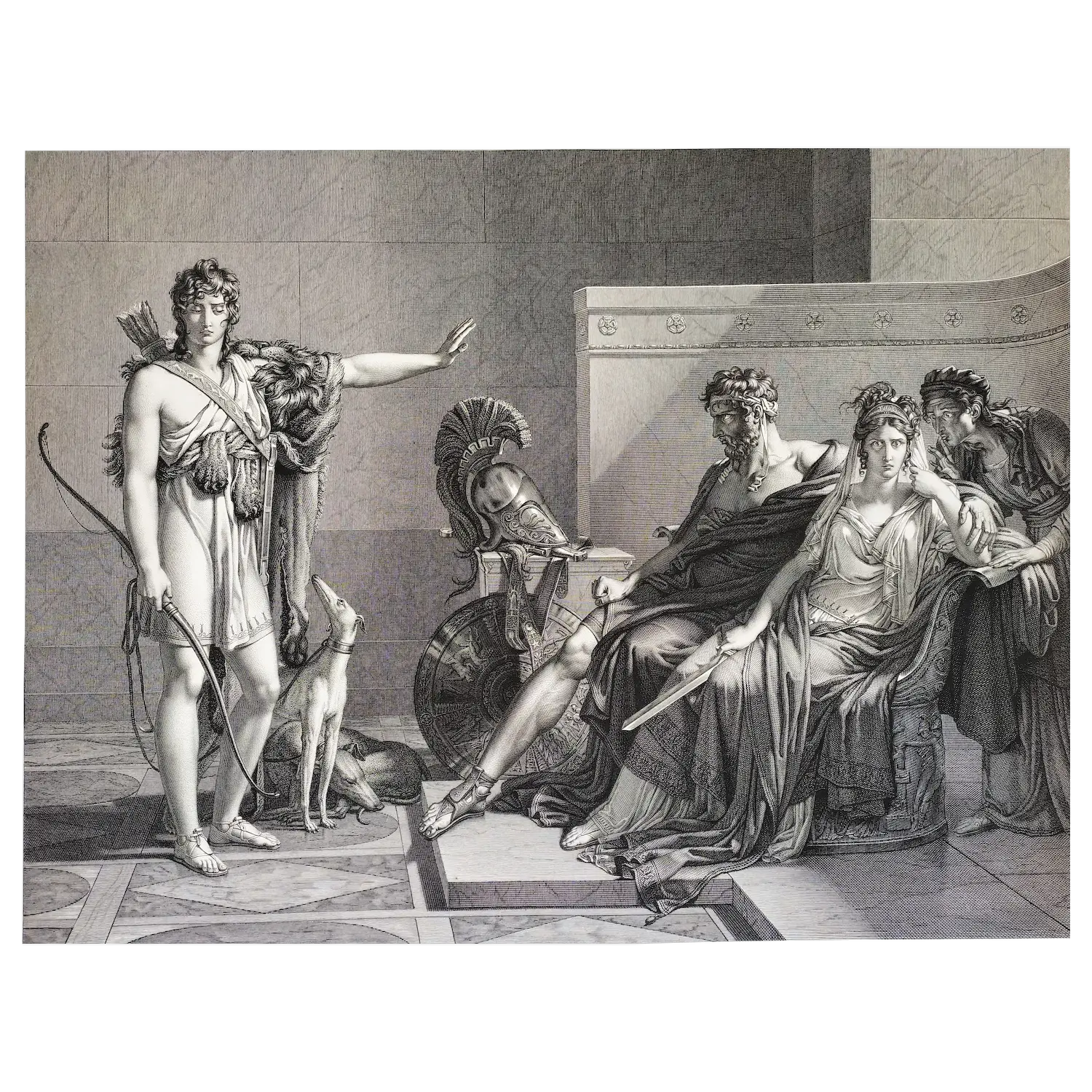
Author, critic, and translator Daniel Mendelsohn follows the theme of unrequited love in works by Homer, Sappho, Dante, Goethe, Jane Austen, W. Somerset Maugham, Marcel Proust, and more.
“Thou lov’st me not, / And never wilt! Love dwells not in our will. / Nor can I blame thee, though it be my lot, / To strongly, wrongly, vainly love thee still.” So writes Lord Byron in “Love and Death”, describing a phenomenon that (alas!) most of us have experienced—and, more to the point, that has inspired some of the most brilliant and wrenching works of literature. In this five-part NYRSeminars season, we will be examining the phenomenon of unrequited love throughout its evolution as a subject in Western literature. We will begin with the classics, examining texts by Homer, Sappho, the tragedians and the Latin love elegists, and then move to the Middle Ages and early modern period, reading works by Dante, Petrarch, and Shakespeare in which the poets address themselves to cruelly unresponsive women. From there we will segue to the novel, which takes over as the preeminent vehicle for examining hopeless love: from Goethe and Jane Austen to Somerset Maugham and Marcel Proust.