


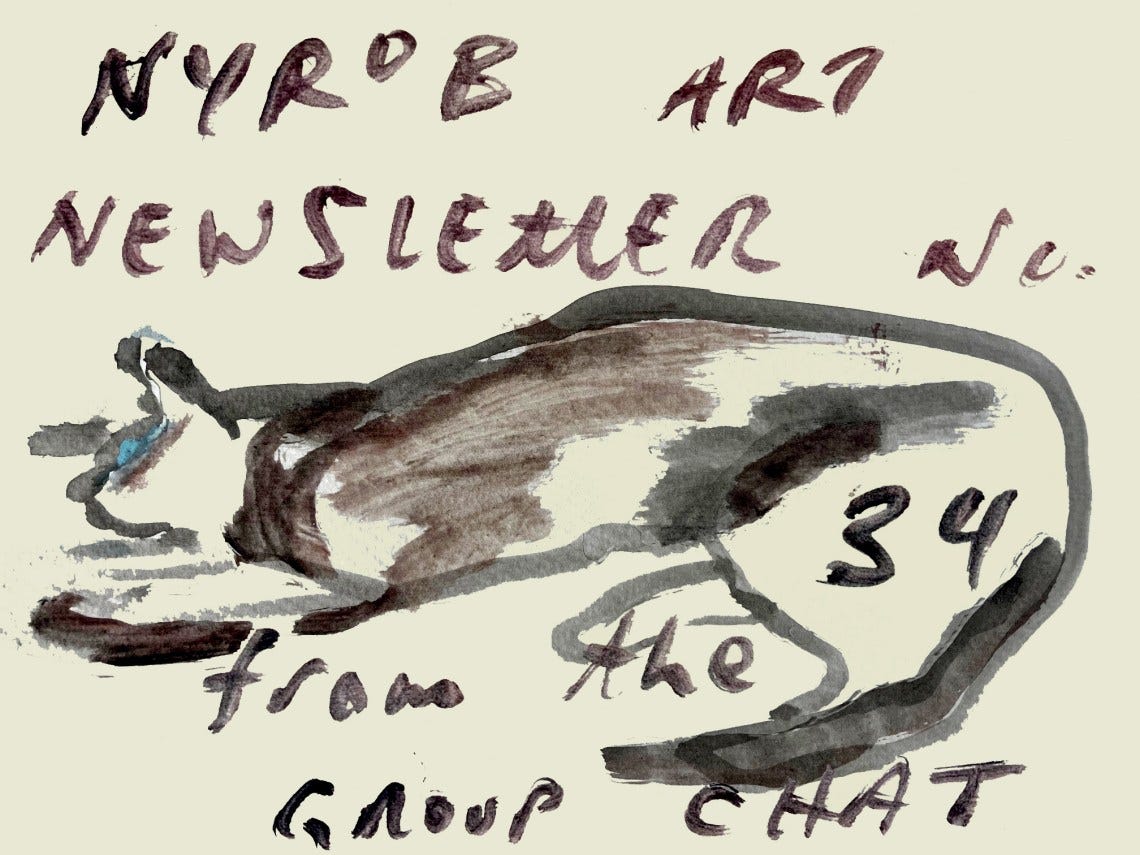
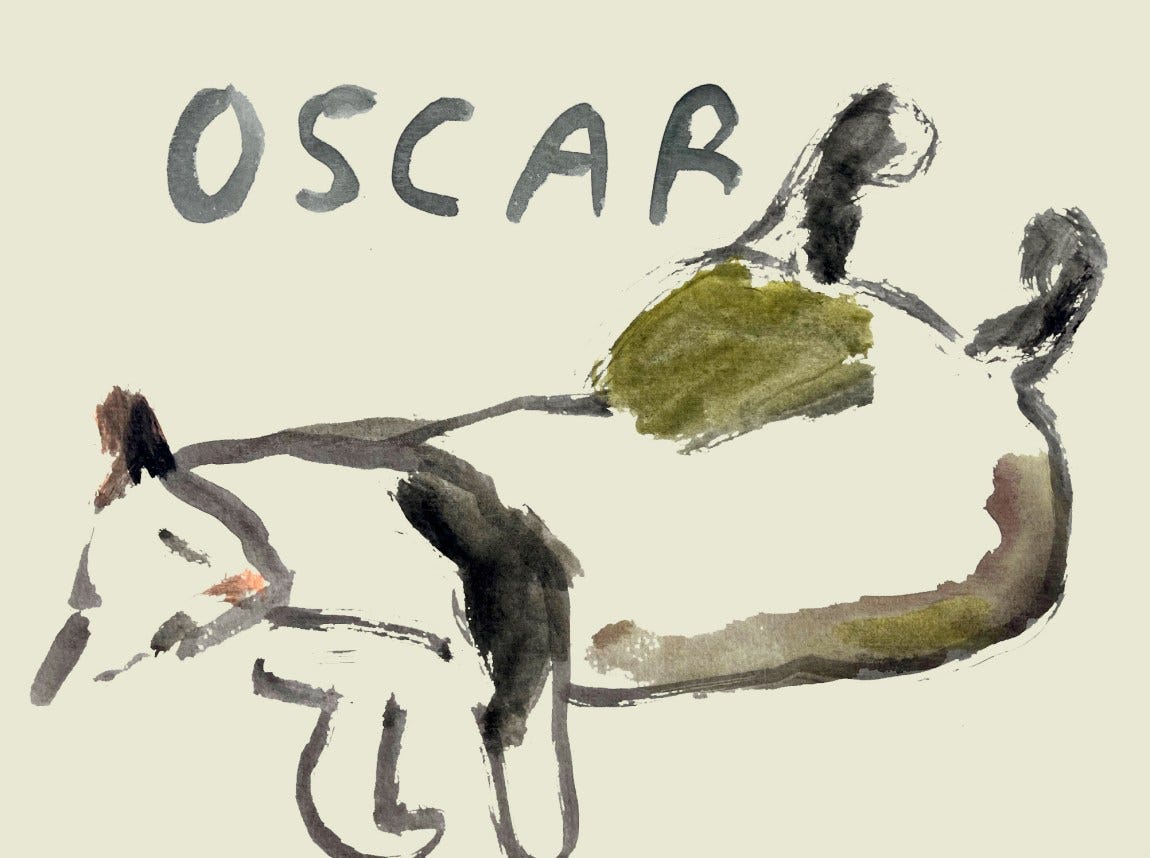
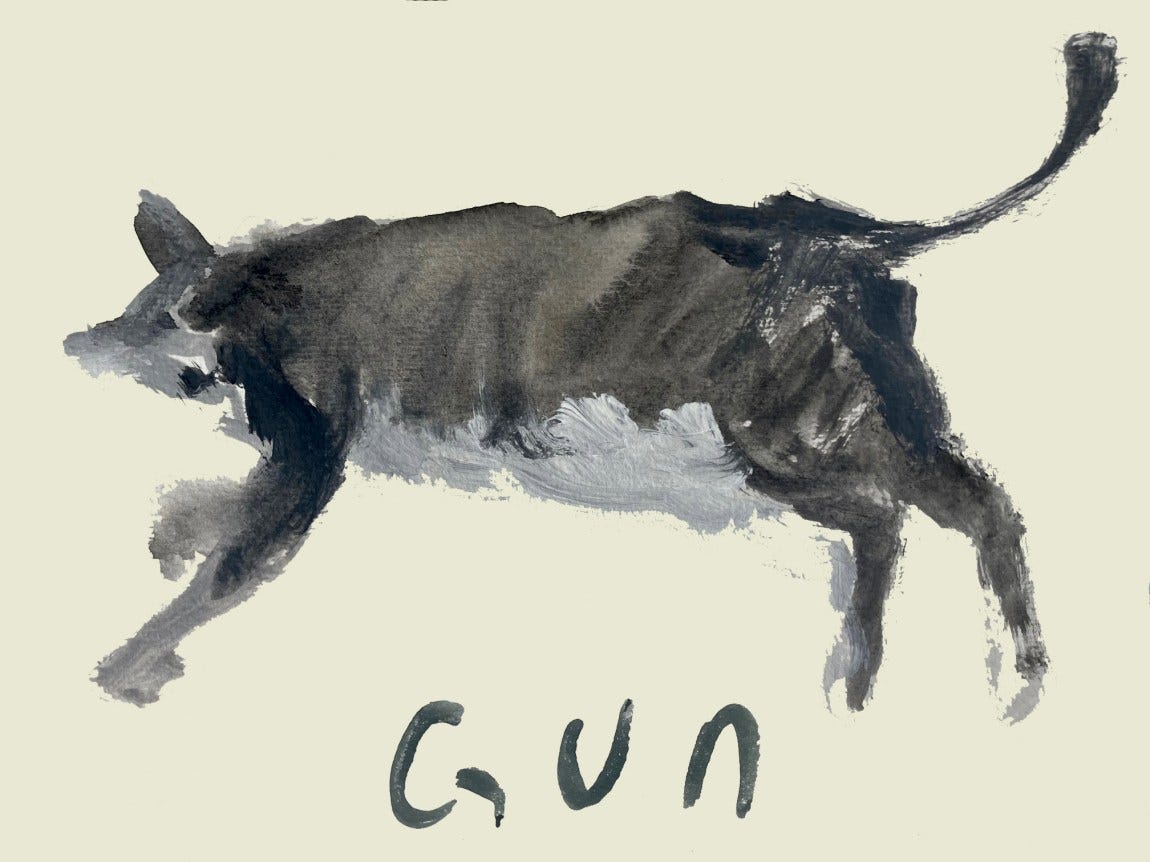
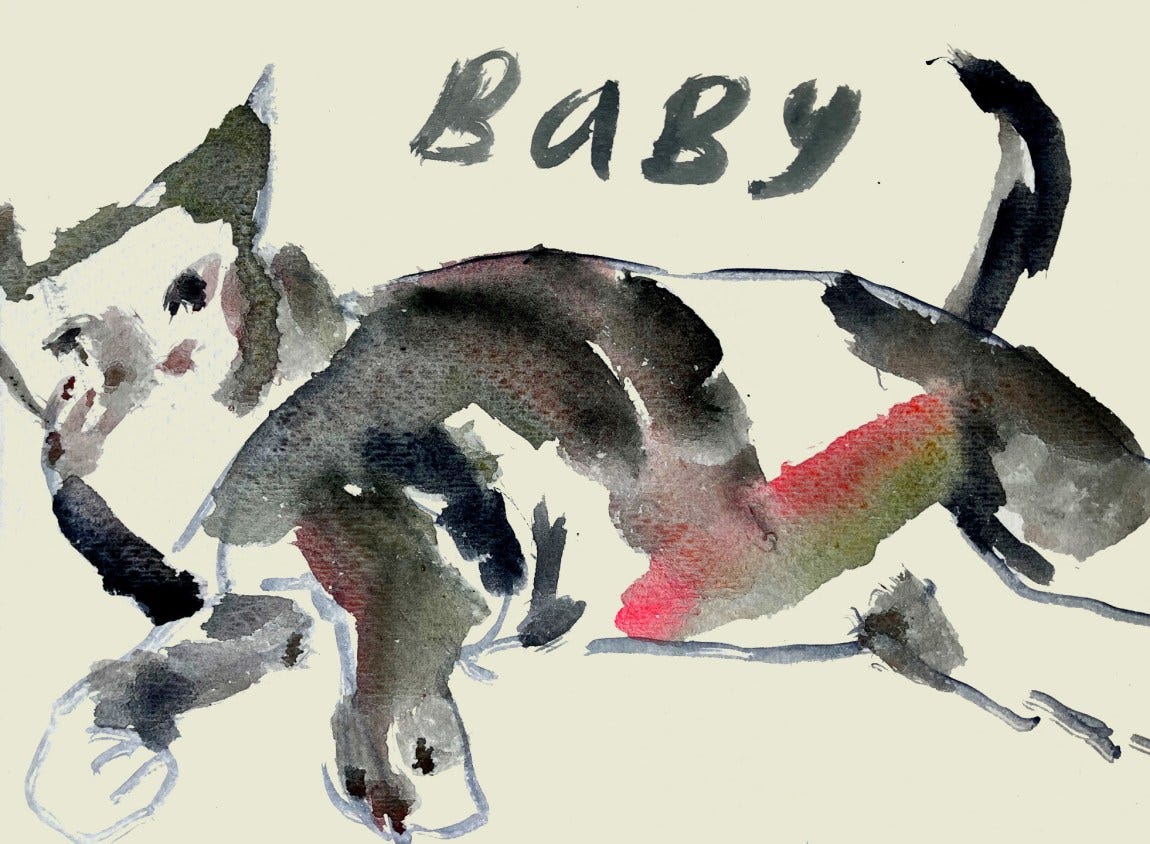
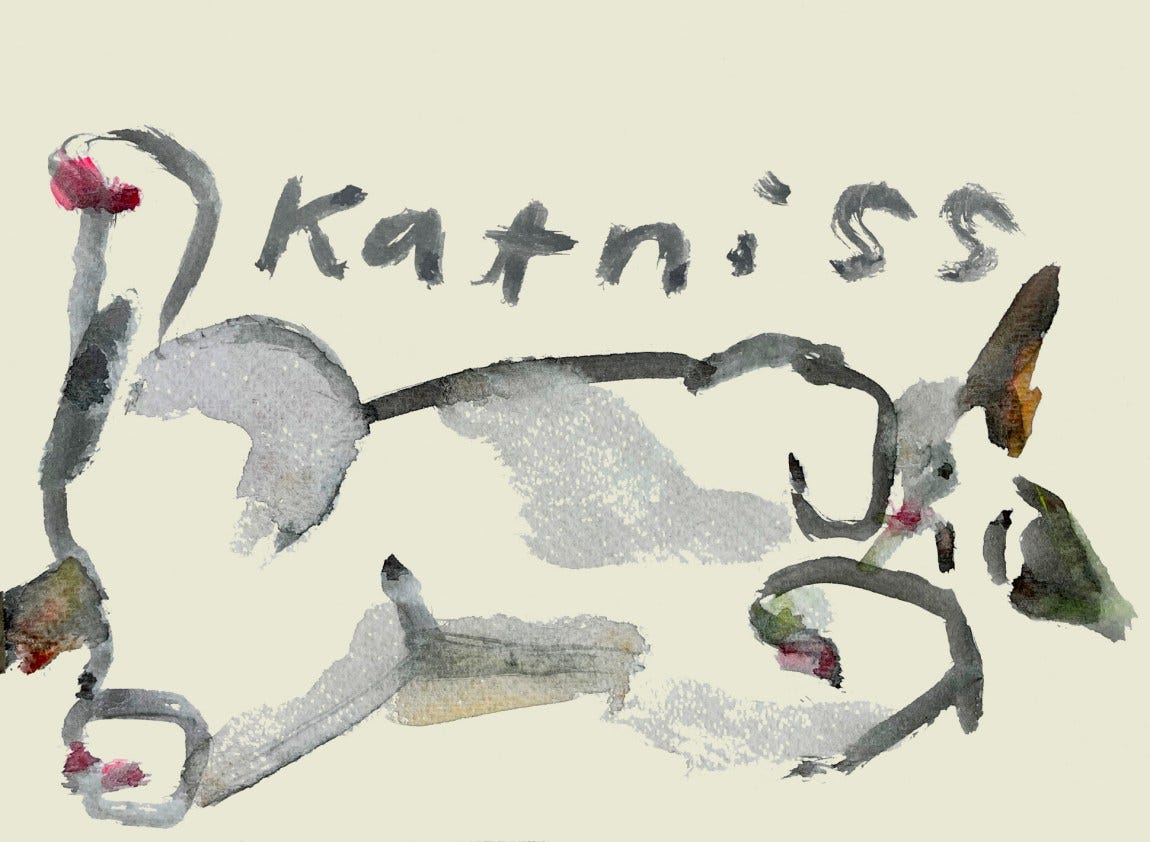
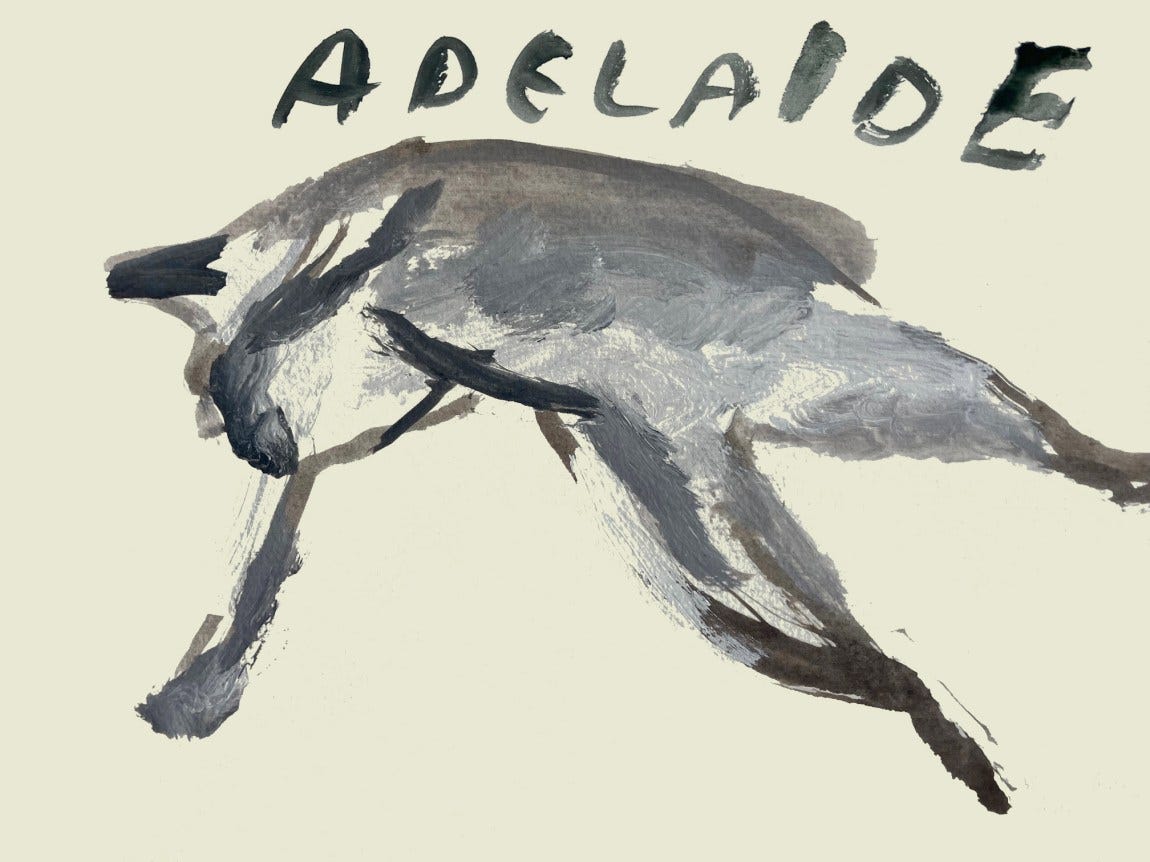
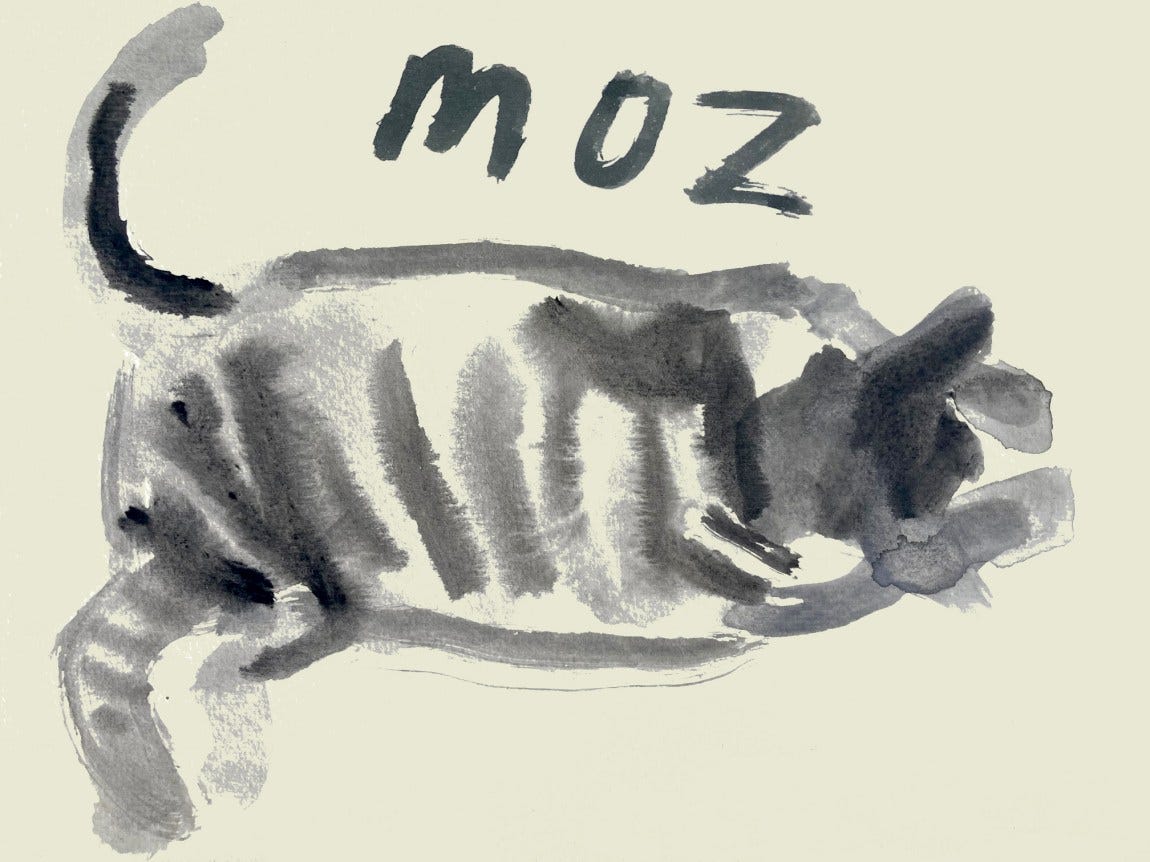
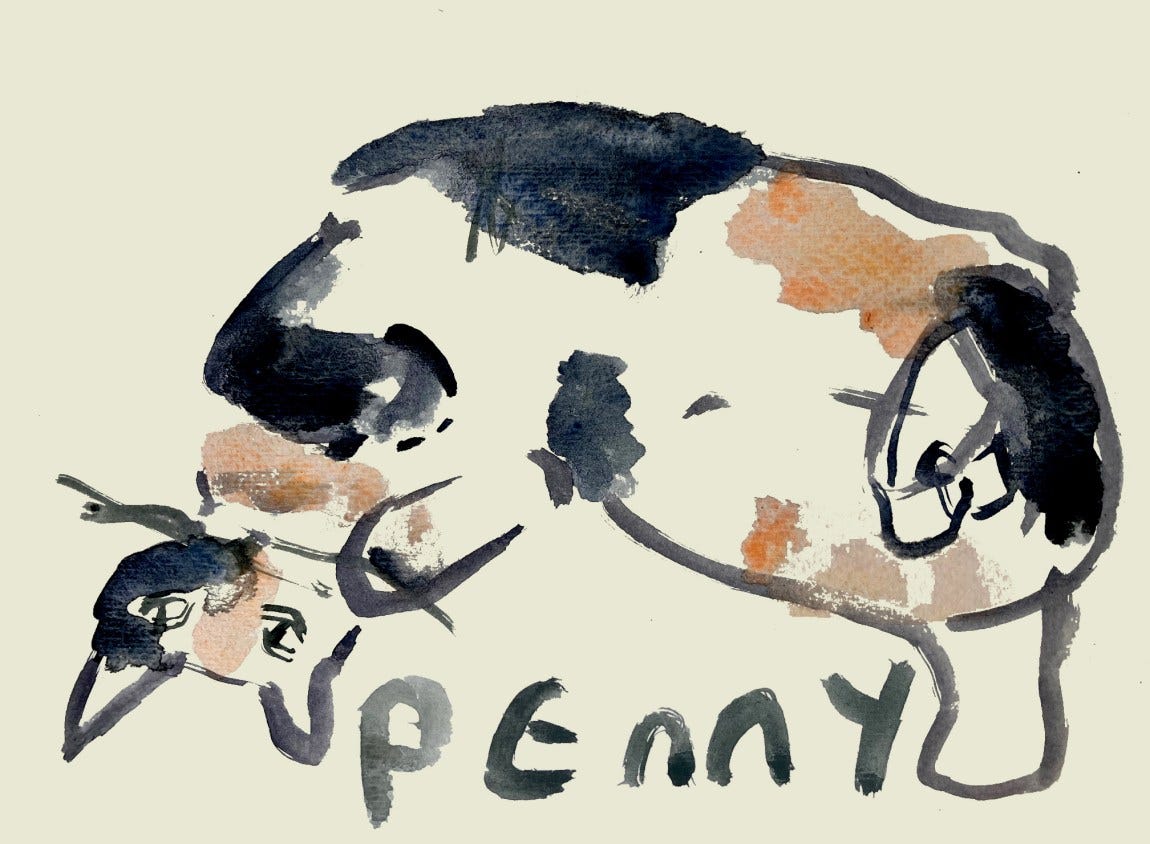
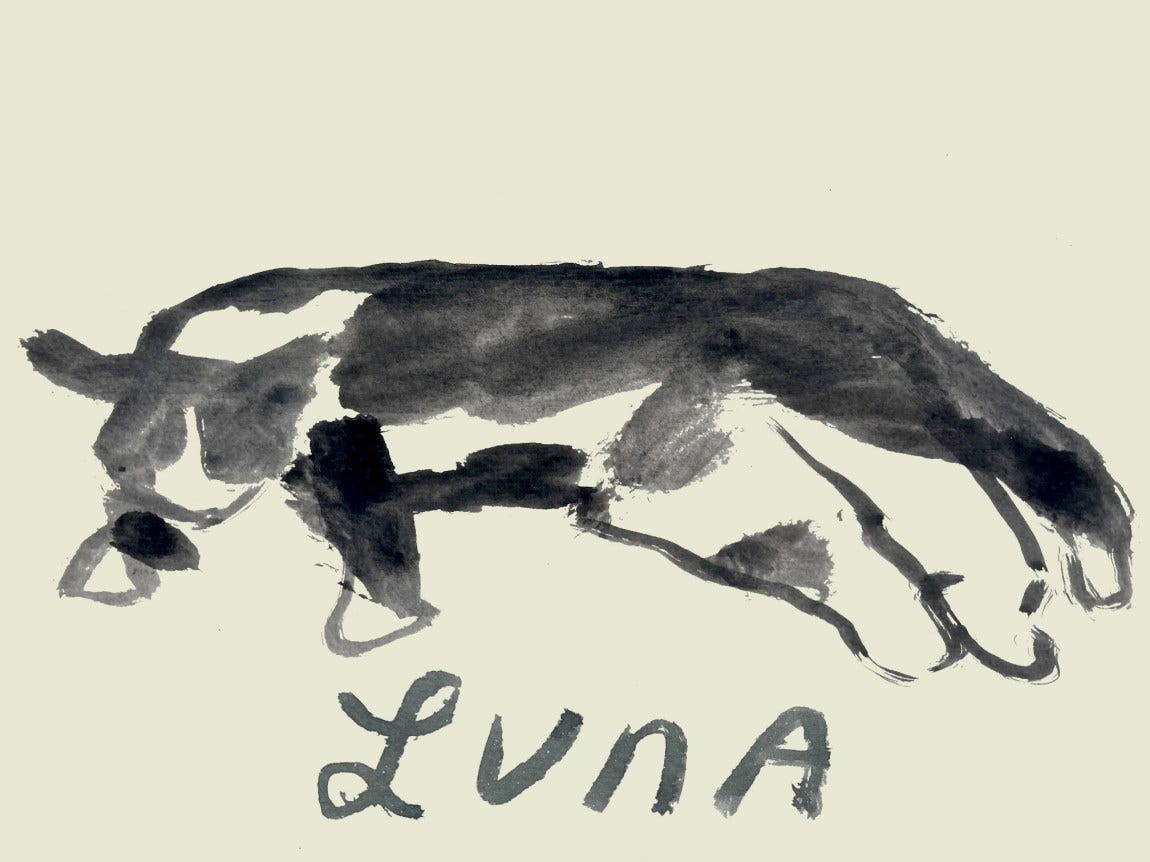
Our thirty-fourth art newsletter comes via The New York Review’s editorial group chat, where some of our staffers have recently been posting photos of their pets in the summer heat. I love drawing cats, and I find a lethargic cat lying supine to be a beautiful thing. Herewith, please find a gallery of our beloved, overheated cats.
I initially planned on putting a swimmer of some kind on the cover of our July 24 issue, as we did for one of the summertime issues last year, but I threw Keiji Ito’s Five Tones Jelly (2021), a painting of what looks like Devils Tower if it were made out of green Jell-O, into the mix, and the editors loved it. Something about its uncanniness seemed to nod to James Gleick’s essay about artificial intelligence, Casey A. Williams’s essay about Kohei Saito’s degrowth philosophies, and the more general news that Kraft Heinz is discontinuing the use of artificial dye in its green Jell-O. When I contacted Ito, he explained that the painting’s title is a reference to the five-tone melody that the aliens play in Close Encounters of the Third Kind.
Jarrett Earnest’s essay about the Jack Whitten retrospective at the Museum of Modern Art was an opportunity to publish some of Whitten’s groundbreaking paintings, and for Anahid Nersessian’s review of Service, the debut novel by John Tottenham, the Amsterdam-based artist Michelle Mildenberg delivered an appropriately uncomfortable-looking portrait of Tottenham as a beleaguered bookstore clerk.
I was excited to work with Sarah Böttcher again, as her last portrait for us, in 2023, had been a wonderful rendition of Thomas Brussig. I asked her to draw the Brothers Grimm for Regina Marler’s review of a new biography of the famous folklorists. Böttcher turned in a creeping and creepy double portrait of the siblings, surrounded by flora, fauna, and, as Marler describes it, “the black soil of the German forest.”
I loved Michelle Nijhuis’s essay about conservation and had been looking for the opportunity to assign Fanny Blanc something other than a portrait. She sent a great drawing of a family in a wonderful zoo-cum-museum landscape.
The Berlin-based illustrator Laura Breiling is adept at stuffing ideas into her portraits so she was a natural commission for Casey A. Williams’s essay on the Japanese philosopher Kohei Saito and his books about how to respond to the climate crisis. She perched a little Karl Marx on Saito’s shoulder and in the background drew Prometheus holding a banana as, she told me, “a sign for abundance in the industrial wasteland.”
We found a painting of the controversial art collector Albert C. Barnes by one of my favorite painters (of swimmers) Giorgio de Chirico, to accompany Ruth Bernard Yeazell’s review of two books on Barnes’s life and his eponymous museum.
Simone Goder took on a portrait of the Canadian writer Sheila Heti for Lola Seaton’s review of her Alphabetical Diaries. I didn’t tell Goder that Heti is one of my oldest friends until the second round of edits, as I encouraged her to hew a little closer to Heti’s more recent appearance. Fortunately, instead of being annoyed by my nitpicking, Goder wrote, “thank you for trusting me with your friend!” and made a few deft changes.
We paired The Maths Lesson, a Julie Cockburn painting of a child whose head has been broken up into triangular fractals, with James Gleick’s essay on the problems with AI. I’d thought for a while that Cockburn’s eerie paintings might fit well into our magazine and was glad that she saw the synchronicity too. The series art in the issue, titled Bouquet Drawings, is by Jared Nangle, an illustrator and New Yorker cartoonist.
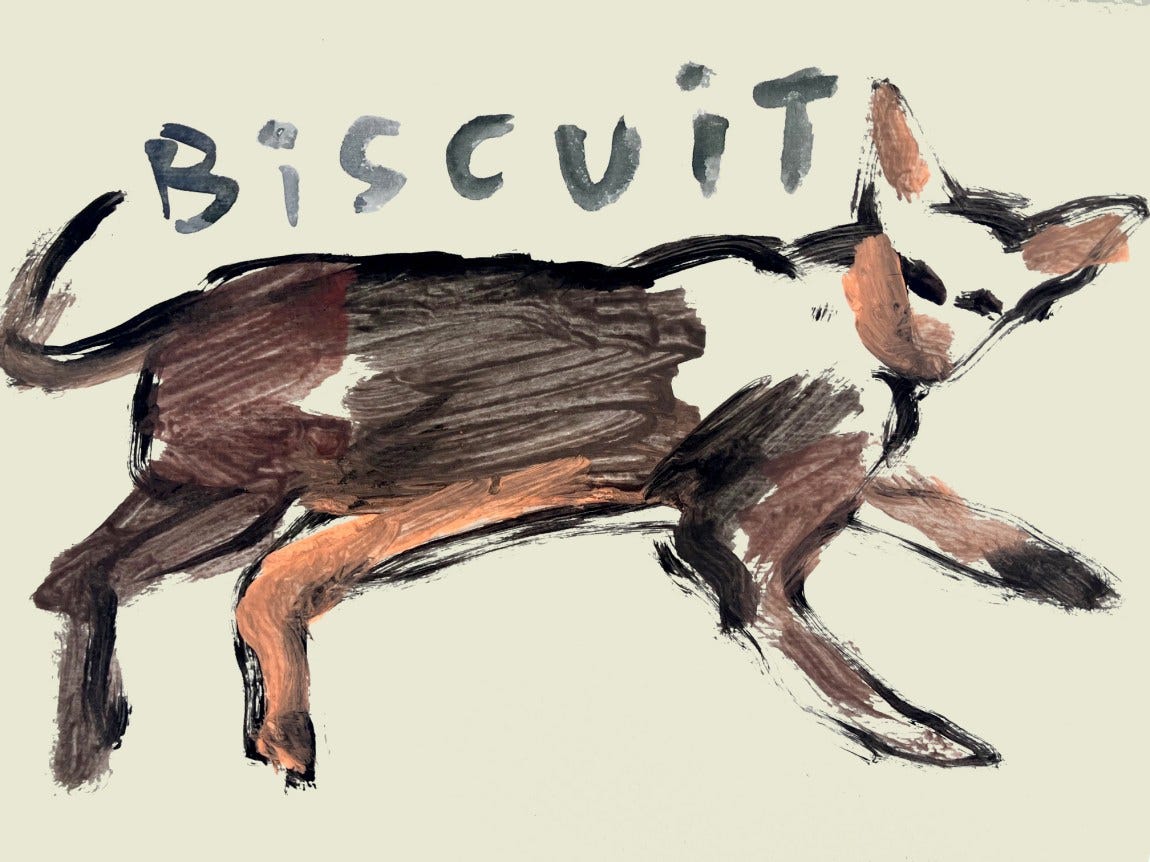
My own cat, Biscuit, is surviving the summer by sprawling on towels, eating fish skins, and recently enjoyed the Fourth of July fireworks tucked into the armpits of my daughter’s hoodie.