

A More Pliant Chavista
Alma Guillermoprieto on Venezuela

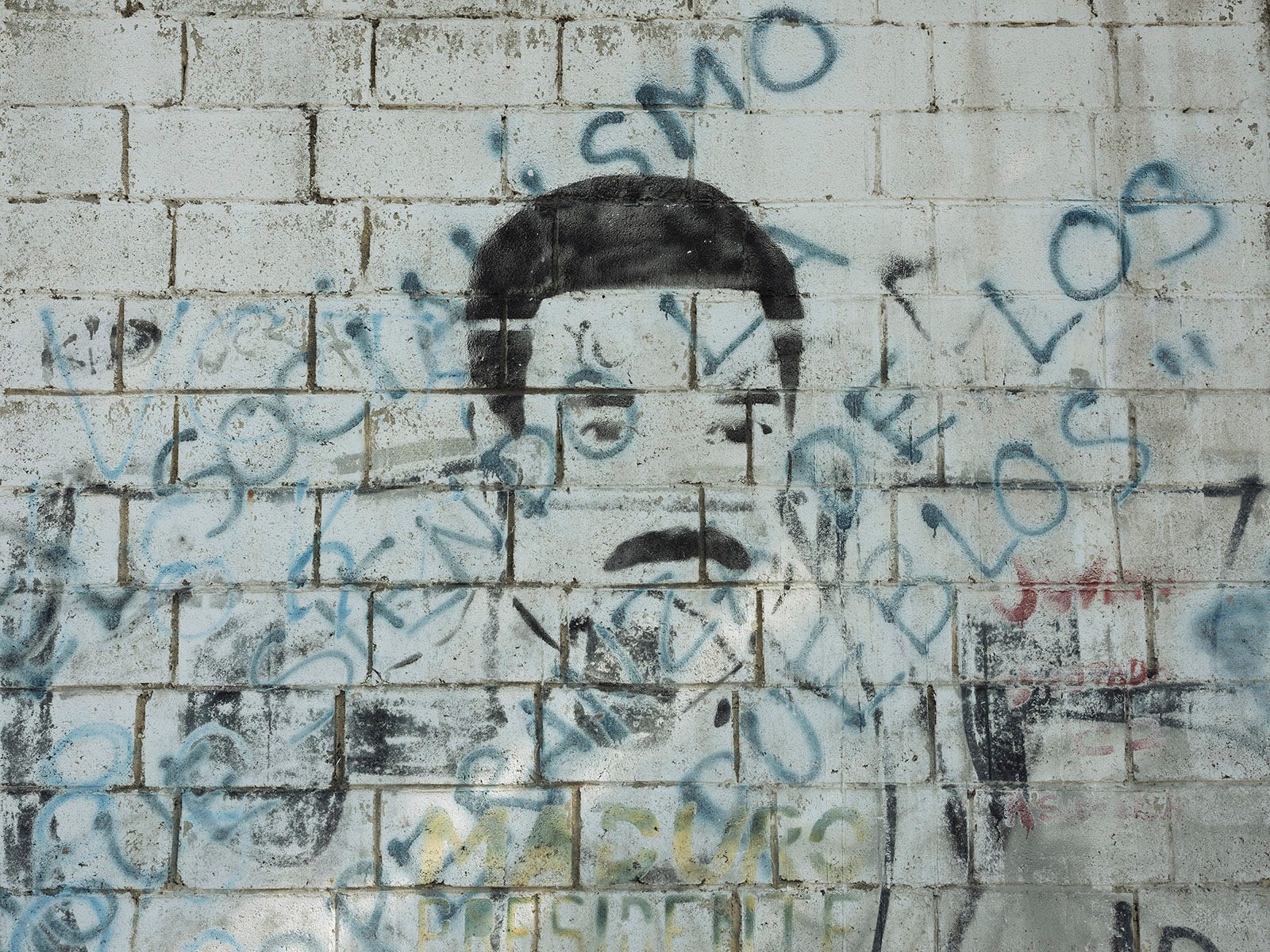
What, asks Alma Guillermoprieto in the Review’s February 12 issue, is the United States doing in Venezuela? While the success and feasibility of Trump’s “grotesque and stupid and horrifying” venture are still very much in doubt—“Trump’s long-term plan for Venezuela has yet to be formulated,” she drily observes—the president’s foreign policy has had at least one characteristic result: “An entire world order is in question, but there is nothing to fill the void.”
Below, alongside Guillermoprieto’s essay, are five articles from our archives about Venezuela’s modern history.
History sometimes repeats itself out of sheer malice. For example, in 1898 the United States stepped in to help Cuba in its long struggle for independence from Spain, and won. Cubans were grateful but not yet free. American troops were in control of the island, and the US refused to remove them until Cuba accepted eight conditions presented to Congress in 1901 by Senator Orville Platt. The most important provisions of what became known as the Platt Amendment were that Cuba was required to lease land indefinitely to the US for naval stations (thus Guantánamo), that it could not make treaties with other nations, and that to preserve Cuban independence or maintain a stable government, the US retained the right to intervene on the island militarily, which it did four times before the humiliating provisions (but not the lease on Guantánamo) were repealed in 1934. Secretary of State Marco Rubio—the child of Cuban émigrés—must know the Platt Amendment well: the text was burned into every Cuban’s heart, fomented Cubans’ fervent nationalist sentiment, and for decades contributed to the willingness of many of them on the island to put up with Fidel Castro, the great defier of the United States.
Until last year, those provisions were the baldest formulation of America’s imperialist ambitions, but Donald Trump has refashioned and extended the terms under which subject countries can expect to live. Moments before 2:00 AM on the third day of the New Year, explosions and the roar of aircraft were heard over Caracas. The US, claiming the right to depose at will the leader of an independent nation, captured the de facto president of Venezuela, Nicolás Maduro Moros, and his wife, Cilia Flores, and in doing so shredded the principle that makes peaceful international coexistence possible. It was still January 3 when the couple was transported to the Metropolitan Detention Center in Brooklyn. A buffoonish man to begin with, Maduro was perp-walked wearing something hat-like on his head that Goofy might have loved. Reporters who gathered in haste at Mar-a-Lago hardly knew how to formulate their questions about an act of war unauthorized by Congress that amounted to a kidnapping. (The administration called it “an extraction.”) The whole thing was grotesque and stupid and horrifying in equal measure, and gaspingly unbelievable, until one remembered what the Platt Amendment revealed about America’s sense of itself.
For weeks we had been watching as the US assembled the largest display of naval and air power in decades around the sunny islands of the Caribbean, with the intention, one foolishly thought, of sticking around for a bit, playing superpower at the expense of American taxpayers, and cowing Maduro into resigning. But no, the Trump administration was both dead serious and reckless. The proof was Maduro in his ridiculous headgear.
María Corina Machado, the stubborn leader of the Venezuelan conservative opposition and 2025 Nobel Peace Prize winner, contributed to the disaster. In the months before the July 2024 presidential elections, she was polling so strongly that the Venezuelan government thought it prudent to ban her candidacy. Never one to give up, Machado appointed the aging politician Edmundo González to run in her place. According to virtually all qualified observers, on election day he won easily over Maduro, former president Hugo Chávez’s appointed successor, who had been in power since 2013 and who proclaimed himself the winner.
This was openly fraudulent but not surprising, and it seems to have reinforced Machado’s long-held belief that a bloodless transition to democracy was not feasible. In the first days of the second Trump administration she spoke with Rubio, an old acquaintance who was the brand-new secretary of state. Rubio is a foreign policy wonk and an old-style anticommunist with a special hatred for the collapsing socialist regime in Cuba and for Venezuela, Cuba’s longtime ally and provider of fuel. Maduro would never allow fair elections, Machado insisted; he was an illegitimate president, he was ruining Venezuela, and he should be kicked out—by force, if necessary. After the election she had prudently gone into hiding, but if she were president, she said in online interviews and meetings, she would open the country to foreign investment and especially to foreign oil companies, most of which had been expelled by Chávez in 2007.
Her argument coincided with the thinking of the new Trump administration, which in its previous incarnation had appeared to care little for Venezuela or adventures abroad. In February 2025, shortly after Rubio’s meeting with Machado, in what no longer seems like an unrelated event, the US designated eight Latin American drug cartels—three of them with members operating in Venezuela—as Foreign Terrorist Organizations. In August the US military parked three guided-missile destroyers just off the Venezuelan coast and soon added assault ships, an aircraft carrier, thousands of troops, and large and small planes. In September the Department of Defense was renamed the Department of War, three days after eleven people—name and nationality unknown—were killed in their motorboat in the Caribbean by a US air strike. More than a hundred others have been killed since then.
Machado approved these actions. She called the administration’s strategy “absolutely correct” and said that “Maduro started this war, and President Trump is ending it.” This was after she received the Nobel Peace Prize and gushed that he was the one who really deserved it. (Rubio and seven other Republican lawmakers had actually promoted her nomination.) But Trump, who inexplicably thought he was in the running for the Nobel, was not amused: the administration’s communications director, Steven Cheung, regretted on social media that the Nobel Committee had put “politics over peace” in failing to give him the prize. On January 3, during an eerie morning press conference at Mar-a-Lago, Trump made it clear that neither Machado nor González would be taking power: “She doesn’t have the support within or the respect within the country.”
To give Machado credit, she fought Chávez and his designated successor from the start, and even if it meant going into hiding she never left her country for Miami or Madrid, unlike so many of her light-skinned, well-off supporters who called Chávez “monkey.” (In turn, he took grinning pleasure in describing himself as un poco indio, un poco negro.) Machado, the daughter of an industrialist, could have had an easy life, but she chose instead to shout herself hoarse at endless protest marches and to live with intimidation and threats for more than twenty years, sensing that Chávez, the left-wing populist who was first elected president in 1998, did not want just a one- or two-term presidency and would ruin Venezuela. She was brave, but it was foolish to expect that by calling for the invasion of her own country she would earn the invader’s gratitude.
Read the full article on the Review’s website here.
From the Archives: Venezuela
Rachel Nolan on Venezuela’s collapse
William Neuman on Nicolás Maduro’s fraudulent 2024 election
Nicholas Kenyon on the country’s triumphant youth orchestras
Alma Guillermoprieto on the legacy of Hugo Chávez
If you like our Substack, consider subscribing to our magazine by visiting nybooks.com/substack for a special discount on a full subscription.
All true about the Platt Amendment, but it pales in comparison to the Soviet Union’s 45 year occupation and control of Eastern Europe engineered by Joseph Stalin, a man who Cuba’s “liberator” Fidel Castro greatly admired.
An intriguing perspective that challenges the rigid narratives and invites a closer look at evolving viewpoints.